

Share:
Some people spend retirement enjoying a tropical paradise. Others focus on making a difference. Bob Coughlin is doing both, working to create change in the two places he calls home — Cincinnati and the Bahamas.
A GCF fundholder for 25 years, Coughlin knows a thing or two about how an ordinary person can have a big impact. While his philanthropic footprint is bigger these days, it’s fueled by the same mindset that has always guided him: Be a lifelong learner. Stay open to change. Bring rigorous planning and directional thinking to everything you do. And don’t be afraid to ask questions and take the first step — something instilled in him by parents who “taught me to just raise my hand and see where it goes.”
His approach has worked in both the corporate and philanthropic worlds. Coughlin built Paycor — the Cincinnati-based payroll and human resource service provider he founded in 1990 — into an industry leader with $300 million in annual revenue, nearly 2,000 employees and more than 30,000 clients before he retired in 2019. The Flying Pig Marathon, which he founded in 1999, has grown to a nationally recognized event that has raised more than $18 million for 300 charities.
‘Helping others in my communities became a mission’
Community-mindedness has always been core for Coughlin.
“My parents both died pretty young. You don’t get to be here forever. I also had two disabled sisters, so I developed empathy early,” he said. “Getting to the place where we can give back is a success motivator. It’s not about being in a position to buy things…if I can’t gain experiences with something, I don’t want it. I want to have an impact while I’m here and get joy from helping others in my communities.”
In 2008, Coughlin wrote his personal mission statement, which helped refine his priorities and shape his philanthropic path, whether through his GCF fund or the Bob and Jeanne Coughlin Foundation. He prioritizes youth development, with a focus on experiential learning; environmental sustainability; individuals with disabilities; and “communities within reach,” meaning those with which he has personal involvement.
For him, that means Cincinnati — which he has called home since elementary school — and the Bahamas, where he and his wife Jeanne became residents in 2021.
The family began exploring the Caribbean nation about 20 years ago and fell in love with its diverse ecosystem, rich cultural heritage and welcoming people. Coughlin also saw an opportunity to play a bigger role in the region’s philanthropic community, particularly in sustainability and conservation combined with youth development.
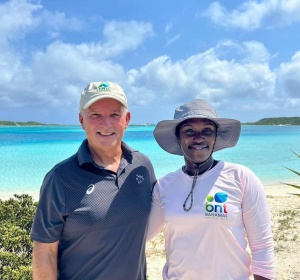 “The Bahamas is a petri dish of beauty and ecological diversity,” he said. “But growth is immense there right now; bulldozers are prevalent. Conservation is important. Exuma felt remote 20-plus years ago, but now it doesn’t.”
Protecting an ecological jewel
In 2020, Coughlin founded the nonprofit Friends of Exuma. It provides financial, coaching and other support to a variety of programs focused on conservation, youth development, cultural preservation and community relief.
One of those programs is the Exuma Sailing Club, which works to keep the spirit of sailing alive with youth. With support from Friends of Exuma, the club has grown to 32 members from 15, in addition to adding girls to the program. Coughlin also worked with club leader Dallas Knowles to think through management and budget processes, including working toward a goal of buying a large racing sailboat, an A-class sloop, for the community.
“They’re really teaching grit with this club!” Coughlin said.
Another priority in the Bahamas is preservation of its biodiversity and ecological importance. The Coughlin Foundation has donated more than $1 million to the Bahamas National Trust to preserve natural treasures, particularly the Moriah Harbour Cay National Park, and to fund the ongoing work there of a team led by environmentalist Catherine Booker.
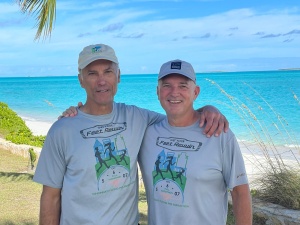 Occasionally, the two places Coughlin calls home converge perfectly. A longtime supporter and trustee for the Cincinnati Zoo & Botanical Gardens, he invited conservationist and former zoo Executive Director Thane Maynard to Exuma to explore Booker’s work, get out on the water and into nature to exchange ideas. Coughlin also desires to grow and expand an exchange program with the zoo for Bahamian students while creating programming for Cincinnati students.
For someone who grew up exploring nature, enrolled in optional summer science camps and dreamed of being a scientist, the Bahamas is an ecological playground. To share awareness of the fragile beauty of Exuma, Coughlin is developing the low-density ecotourism-focused Turtlegrass Resort & Island Club, designed to achieve peak sustainability and support Bahamian culture, art, music and food.
Refining your own path
While not everyone has the resources to pursue philanthropy at the levels Coughlin does, everyone can make a difference. He offers a few thoughts for those looking to find or rethink their philanthropic path, whether that’s becoming a GCF fundholder, creating a foundation, serving on a board, or targeting donations:
- Take the first step: Start with the many available books and other resources. Coughlin loves “Half Time: Moving from Success to Significance,” by Bob Bufford.
- Assess your situation: “Get a piece of paper, drink some coffee one morning and do a SWOT (strengths, weaknesses, opportunities and threats) analysis.”
- Ask key questions: What do you like to do? What are you good at? What brings you joy? How do you want to spend your time and money?
- Get it in writing: Consider creating your philanthropic mission statement and guiding principles.
- Present to peers: Find a relevant professional group and give a presentation on your idea (for a new nonprofit or the like). This makes it more real and forces clarity.
“I spend a lot of time thinking about how to get others to contribute,” Coughlin said. “I believe a lot of people do care, but they don’t know what to do about it.”
Tapping the strengths of GCF
For those still figuring out where their passions lie, he said, GCF is a great resource that can provide a lot of thoughtful input. He also appreciates that GCF can enable anyone to be a philanthropist.
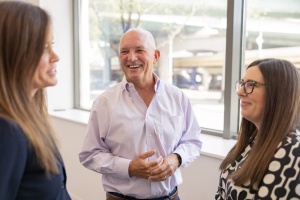 “GCF has a lot of options. You could donate stocks. You could create a donor advised fund,” he said. “They understand tax advantages, they really know the community, and there’s a high level of personal service.”
Whether working to preserve reefs in the Bahamas or supporting adults with disabilities in Cincinnati, it’s critical for anyone hoping to make a difference to know what matters to them.
“You have to focus,” he said. “You can’t solve world hunger, but you can help solve hunger in your community.”
In the end, it all comes down to that for Coughlin: community.
